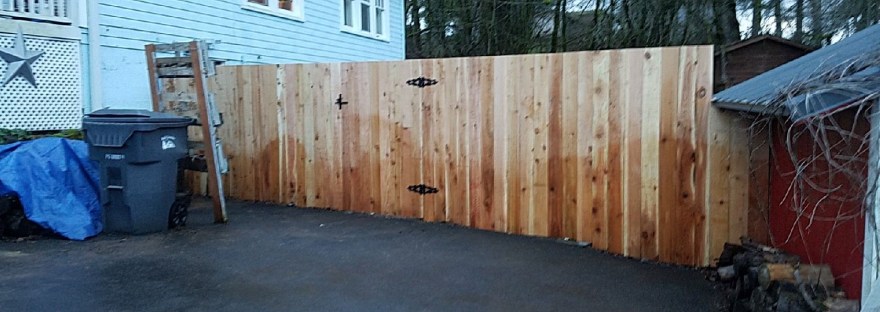
Cedar Fencing

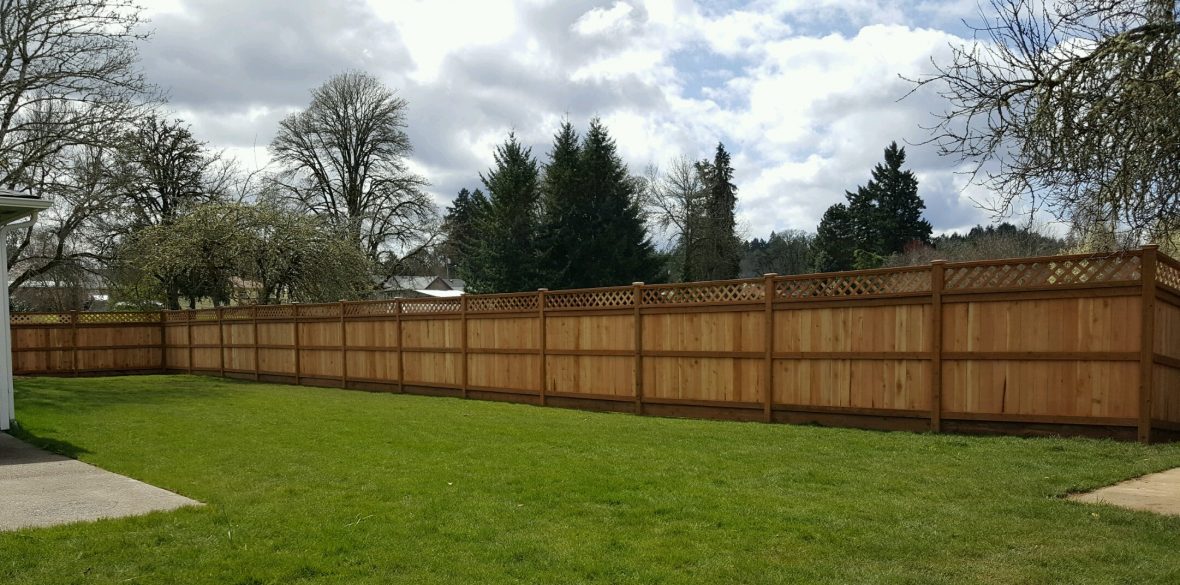
Fencing made from cedar will provide many years of trouble free durability as well as natural beauty. Cedar is a very strong and stable wood. Proven to withstand all weather conditions, and is resistant to moisture and rotting. Cedar wood has natural oils and acids which makes it undesirable to many insects.

Used for many purposes including privacy, boundary markers, and also adds beauty to your home and landscape. Lightweight and has very colorful tones which are beautiful on both sides.

Since they last for so many years you don’t need to worry about replacing them very often. They are a perfect alternative for any wood fence.
Wind Resistance – Good Neighbor Fence


The most common form of fencing is the cedar fence. Sometimes, cedar fences are not always long-lasting in windy areas.

For example, having a thin sheet of fence board, does not offer much resistance against strong winds. Sometimes we will recommend a good neighbor fence to our customers if they live in a strong windy area.

If you have property out in the country, you may want to consider a strong fence, one in which can withstand windy conditions.

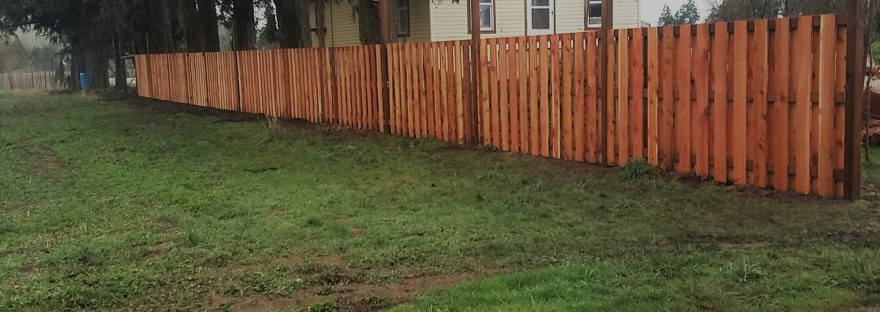
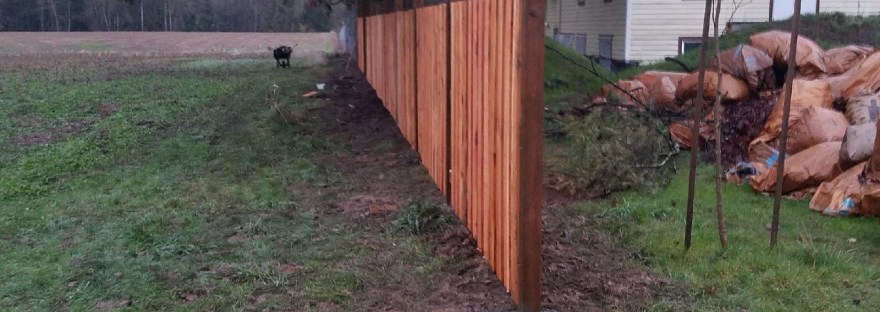
A good neighbor fence simply has alternate wooden fence boards on each side of the fence.

What this means is, instead of having fence boards evenly laid on just one side of the rail, you would have alternate fence boards, which allows airflow through the fence structure.
Allowing airflow to partially go through the spacing in a good neighbor fence will allow the fence to be more wind resistant.

Determining a Straight Fence Line


Set one end post, preferably where you can measure off another structure to know where your property line is; then place a nail on the inside of the post leaving the nail slightly out of the wood. The lower the string is to the ground without touching the better. Pull the string to where you are placing the opposite end post.

Once you have decided on the location of the post, set the post and put another nail on the inside of the post at roughly the same height as the other. Pull the string hard and tie it off. Then take a can of spray paint and measure out the distance between each post hole along the string line. Estimate how many posts you need. Take the length of the span and divide it by how many posts you estimated you needed.

Place the post in the hole using a level to make sure it is straight up and down in both directions. You want the insides of your posts to all be the same, so if the string was a board, it would be lying smoothly across the inside of all the post. From here begin to adjust each post straight up and down and flush with the string. The string should just barely be touching the post as to not disturb the accuracy of the string line.

Galvanized Screws

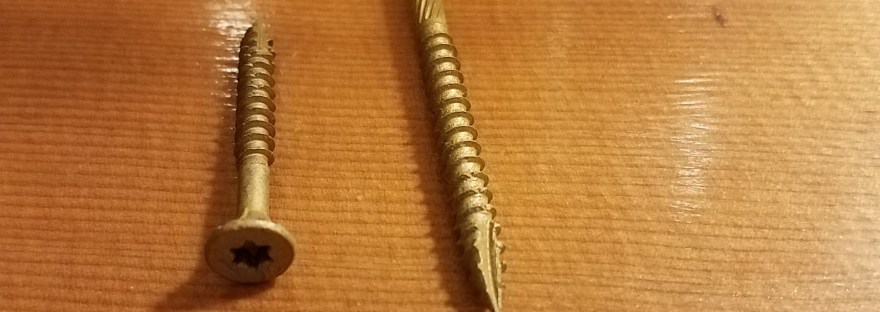
At HB Fence, Decking & Construction, we use galvanized screws on every wooden project. If your fence will be planked with an untreated wood such as cedar or redwood; the zinc coating on the galvanized screws helps prevent your fence from rusting and staining or discoloring fence planks.

Galvanized screws will look much better in the end especially if left with a natural, unfinished look. The screws resist loosening up during wind storms. Nails will get looser as time goes on and can deteriorate and bleed on the wood.

Metal Gate Frames

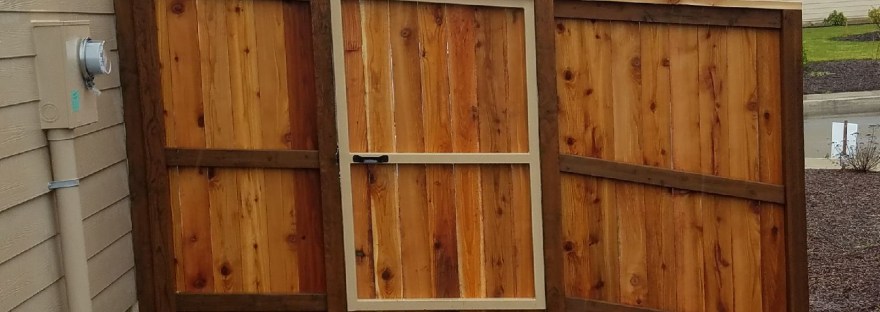
Have HB custom build a Metal Frame for your gate.
On wood frame gates, lag screws are used to attach the hinges directly to the wood rails. We highly recommend the metal frame gates to all of our customers. The metal frame design prevents sagging and provides the strength necessary to hold up your gate.